

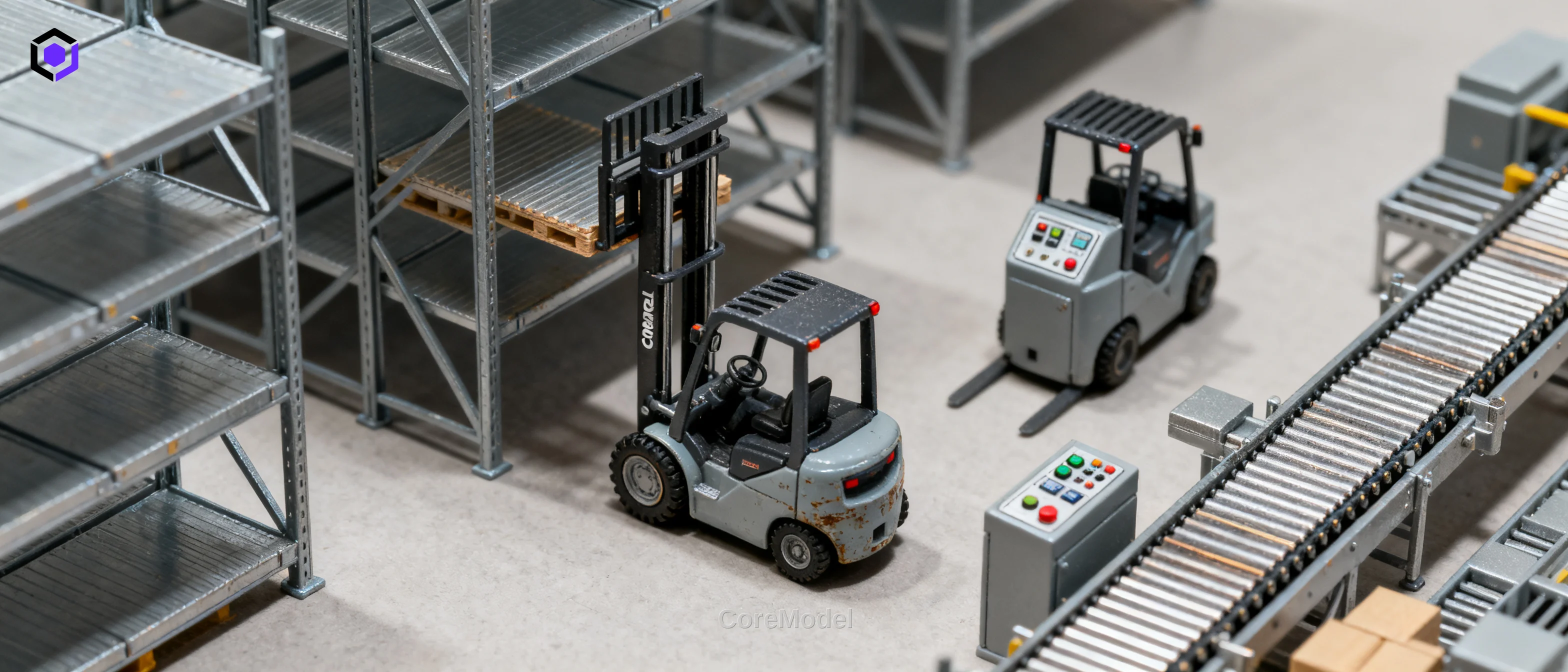
Introduction to Warehouse Scale Models
In the fast-paced world of logistics and supply chain management, warehouse scale models have emerged as indispensable tools for planning, optimizing, and showcasing warehouse operations. These physical representations, also known as warehouse dioramas or logistics models, provide a tangible way to visualize complex storage systems, material flow, and spatial layouts. At CoreModel, we specialize in crafting custom warehouse scale models that help businesses enhance efficiency and communicate their vision with stakeholders.
Why Warehouse Scale Models Matter in Modern Logistics
Warehouse scale models are more than just miniature replicas; they are strategic assets. They allow logistics managers, architects, and engineers to test different configurations, identify bottlenecks, and optimize workflows before implementing changes in the real world. By using a scale model, you can:
- Visualize space utilization: See how racking, aisles, and equipment fit together.
- Improve communication: Present complex ideas to non-technical stakeholders clearly.
- Reduce risks: Simulate expansions or new technologies without disrupting operations.
- Train staff: Use models for onboarding and safety training.
Key Applications of Warehouse Scale Models
1. Layout and Design Optimization
Whether you're building a new distribution center or retrofitting an existing facility, a scale model helps you experiment with different layouts. You can assess the impact of aisle widths, rack heights, and docking stations on material flow.
2. Material Handling and Automation
With the rise of automation, warehouse scale models can incorporate conveyors, AGVs, and robotic arms. This allows you to demonstrate how automated systems integrate with manual processes.
3. Training and Simulation
Scale models serve as excellent training aids. They provide a hands-on way to teach staff about warehouse operations, safety protocols, and emergency procedures.
How CoreModel Creates Warehouse Scale Models
At CoreModel, we combine craftsmanship with cutting-edge technology to produce highly detailed warehouse scale models. Our process includes:
- Consultation: We work closely with you to understand your requirements and objectives.
- Design: Using CAD and 3D modeling, we create a digital prototype for approval.
- Fabrication: Our skilled artisans use materials like acrylic, ABS, and wood to build the model.
- Detailing: We add miniature racking, forklifts, conveyors, and even lighting for realism.
- Quality Assurance: Each model undergoes rigorous inspection before delivery.
Benefits of Physical Scale Models Over Digital Simulations
While digital simulations are valuable, physical scale models offer unique advantages:
- Tactile experience: Stakeholders can touch and interact with the model.
- No technical barriers: Anyone can understand a physical model without special software.
- Enhanced presentations: Models create a lasting impression in meetings and exhibitions.
Choosing the Right Scale for Your Warehouse Model
The scale of your model depends on the level of detail required and the available display space. Common scales for warehouse models include 1:50, 1:100, and 1:200. Larger scales (e.g., 1:50) allow for more intricate details, while smaller scales are ideal for overview presentations.
Case Study: CoreModel's Warehouse Scale Model for a Global Retailer
CoreModel recently partnered with a leading global retailer to create a 1:100 scale model of their new automated distribution center. The model featured multi-level racking, conveyor systems, and robotic pickers. It was used to secure board approval and train staff. The client reported a 20% reduction in layout errors and improved operational efficiency.
Conclusion
Warehouse scale models are powerful tools that bridge the gap between concept and reality. They enable better planning, communication, and training, ultimately driving efficiency in logistics operations. As a trusted manufacturer with over 15 years of experience, CoreModel delivers custom warehouse scale models tailored to your needs. Contact us today to discuss how we can bring your warehouse vision to life.