

Why Water Treatment Plant Models Matter in B2B Environments
In the water treatment industry, communicating complex processes—from intake and screening to coagulation, filtration, and disinfection—can be challenging. Water treatment plant models bridge that gap, offering a tangible, visual representation that stakeholders can explore and understand. At CoreModel, we have spent over 15 years crafting precise scale models for clients in 80+ countries, helping engineers, municipal planners, and educators convey intricate systems with clarity.
Whether you are presenting a new facility design, training operators, or showcasing environmental compliance, a physical model provides unmatched engagement. This guide explores the types, benefits, and selection criteria for water treatment plant models, with insights from our experience as a leading scale model manufacturer in Shenzhen, China.
Types of Water Treatment Plant Models
Water treatment facilities vary widely in technology and scale. Consequently, models are tailored to specific applications. Below are the most common categories we produce at CoreModel.
Municipal Drinking Water Treatment Models
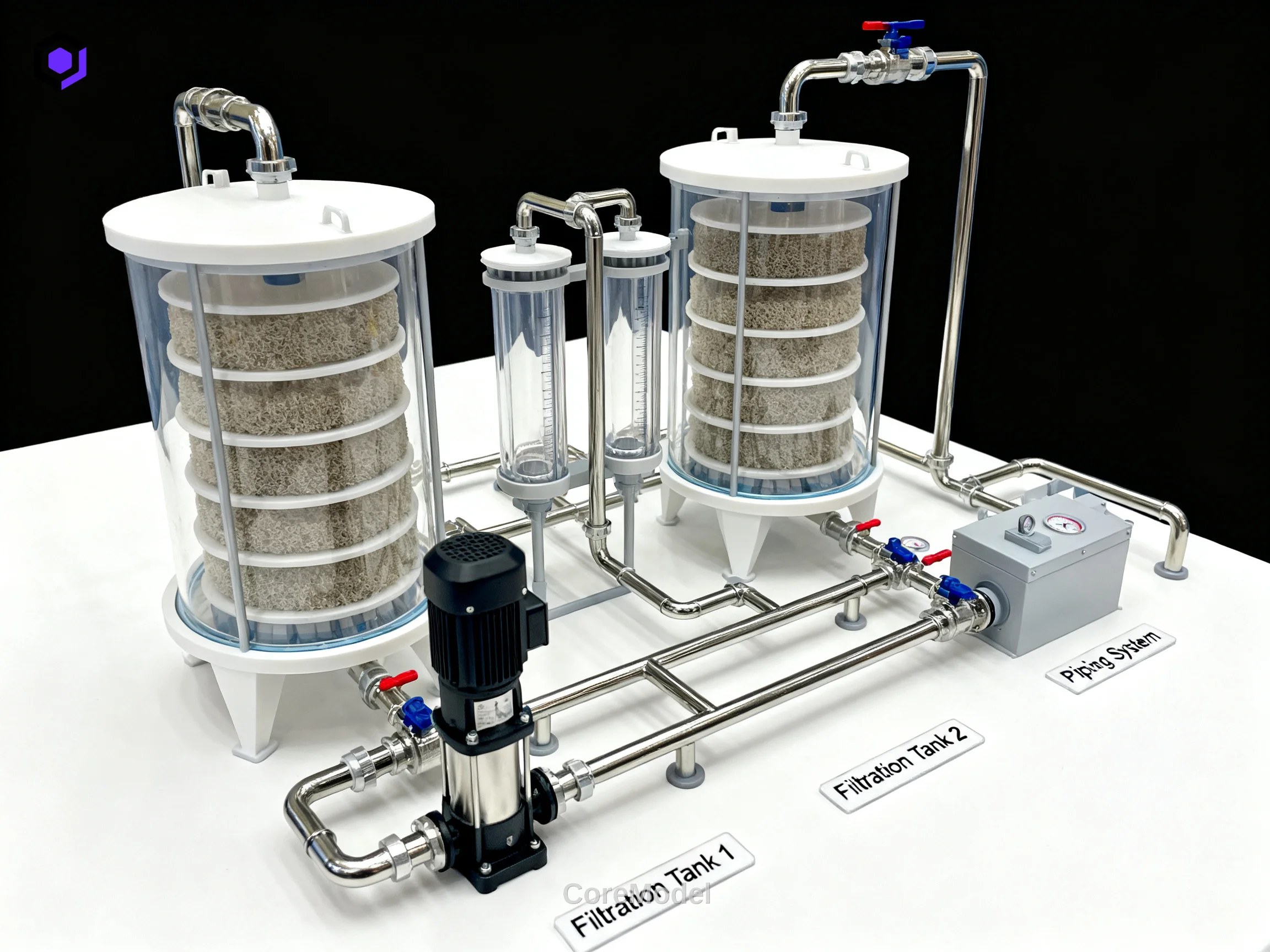
These models depict conventional surface water treatment trains: intake, coagulation, flocculation, sedimentation, filtration, and disinfection. They are ideal for public education, city planning, and operator training. Municipal water treatment plant models often include transparent components to reveal internal processes, such as filter beds and chemical dosing systems.
Industrial Wastewater Treatment Models
Industrial clients require models that highlight specialized processes like equalization, biological treatment, membrane bioreactors (MBR), and sludge handling. These models help demonstrate compliance with environmental regulations and optimize plant design. We frequently integrate industrial wastewater treatment models with flow indicators and control panels for interactive presentations.
Desalination Plant Models
With growing water scarcity, desalination is critical. Models of reverse osmosis (RO) and multi-stage flash (MSF) plants illustrate seawater intake, pretreatment, membrane arrays, and energy recovery systems. These are particularly valuable for coastal municipalities and investors.
Educational and Training Models
Universities and technical institutes use simplified water treatment plant models to teach process fundamentals. These models often feature cutaways, labels, and movable parts to simulate operations. CoreModel produces durable, handcrafted educational models that withstand frequent handling.
Key Benefits of Physical Water Treatment Plant Models
Despite the rise of digital twins and VR, physical models remain indispensable in B2B settings. Here’s why.
- Enhanced Communication: A model transcends language and technical jargon, making it easier to align multidisciplinary teams, clients, and regulators.
- Improved Stakeholder Engagement: At public hearings or investor meetings, a model draws attention and facilitates Q&A.
- Effective Training: Operators can visualize flow paths and component relationships, reducing training time and errors.
- Marketing and Sales: For EPC firms and technology providers, a model is a powerful sales tool that demonstrates expertise and builds trust.
- Design Validation: Early-stage physical models can reveal spatial conflicts or process bottlenecks before construction.
CoreModel’s water treatment plant models are crafted from premium materials like acrylic, ABS, and brass, ensuring durability and fine detail. We offer scales from 1:50 to 1:500, depending on the level of detail required.
How to Choose the Right Water Treatment Plant Model
Selecting a model involves balancing purpose, budget, and timeline. Consider these factors:
- Purpose: Is the model for education, marketing, or engineering review? This dictates the level of detail and interactivity.
- Scale and Size: Larger scales allow more detail but require more space. We help clients determine the optimal scale based on display area.
- Materials: Acrylic offers clarity for tanks; ABS is cost-effective for structures; brass and aluminum add realism for piping.
- Interactivity: LED lighting, motorized components, and touchscreens can simulate flow and control systems.
- Budget and Timeline: Custom models range from $2,000 to $50,000+ depending on complexity. CoreModel provides transparent quotes and adheres to strict deadlines.
Our team collaborates closely with clients to understand their objectives and deliver a model that exceeds expectations. With in-house design, 3D printing, CNC machining, and hand assembly, we control quality at every stage.
CoreModel’s Expertise in Water Treatment Plant Models
CoreModel is a Shenzhen-based scale model manufacturer with a global reputation for precision and reliability. We have produced water treatment plant models for municipal governments, engineering firms, and universities across 80+ countries. Our capabilities include:
- Custom design from CAD files or sketches
- Realistic finishes and lighting
- Integration of moving parts and interactive elements
- Secure worldwide shipping and installation support
We understand the nuances of water treatment processes and translate them into accurate, visually appealing models. Whether you need a single display model or multiple units for training, we deliver consistent quality.
Conclusion
Water treatment plant models are more than just displays—they are tools for communication, education, and decision-making. By investing in a high-quality model, you enhance understanding, streamline approvals, and showcase your commitment to water sustainability. As a trusted partner with 15+ years of experience, CoreModel is ready to bring your project to life. Contact us today to discuss your custom water treatment plant model requirements.